
Short answer. You do not beat a competitor by saying you are better. You win by being different in a way the customer feels. That single shift, different not better, is behind most of the ads that actually move CPA for the brands we run.
Why "we are better" ads quietly fail
Walk through almost any underperforming DTC ad account and you will see the same pattern. Every ad is a slightly louder version of the last one. More ingredients, more percentages, more claims that the product is faster, stronger, cleaner, purer. On paper it looks like a strong offer. In the feed it is invisible, because every competitor is making the exact same promise in the exact same way.
The problem is not that the claims are false. The problem is that the customer has heard them a hundred times and has stopped listening. When your ad sounds like everyone else's ad, the brain files it under noise before the viewer ever reads the second line. You can raise the budget on a noisy ad and all you buy is more people scrolling past it faster.
Different, not better
The ads that actually win are not trying to out-claim the category. They are trying to stand somewhere the category is not standing. A different problem to open on. A different person to speak to. A different mechanism to explain. A different feeling in the first two seconds. Different is what makes the thumb stop, because the brain is wired to notice the thing that breaks the pattern, not the thing that is marginally better than the last pattern.
This is the first filter we run every angle through. Not is this a stronger claim, but is this a different conversation. If two ad concepts are both just better versions of what the brand already runs, we have one idea, not two. If one of them opens on a problem the customer has never heard an ad name out loud, now we have something worth testing. Different is testable. Better is just louder.
The hook is most of the result
On Meta you are not writing a thirty second ad. You are writing a two second ad, and then, if it earns it, the rest. The first frame and the first line decide whether anything after them gets seen. We treat the hook as the single highest-leverage sentence in the entire script, because it is the only part most of the audience will ever experience.
A good hook does one of a few things. It names a problem so specifically that the right person feels caught. It makes a claim strange enough that curiosity beats the scroll. It drops the viewer into a moment they recognize from their own life. What it never does is open with the brand congratulating itself. The customer does not care that you exist yet. They care that you understand what is bothering them.
Feeling first, science later
People do not buy because of the mechanism. They buy because of a feeling, and then they use the mechanism to justify the decision they already made emotionally. So we lead with the feeling. The frustration of not sleeping. The quiet embarrassment of a symptom. The relief of a thing finally working. The science, the ingredient, the clinical number, all of it comes after, as the proof that the feeling is safe to act on.
This is where a lot of health and wellness brands get it backwards. They open cold with a study and a percentage, and they lose the viewer before the emotion ever lands. The study is not wrong, it is just in the wrong order. Make them feel the problem first. Once they feel it, they will lean in for the explanation. Lead with the explanation and there is no one left to explain it to.
Agitate before you solve
The instinct when you believe in a product is to rush to the solution. Resist it. The gap between naming a problem and offering the fix is where the viewer decides this ad is about them. If you solve too fast, the problem never had time to feel real, and a solution to a problem that does not feel real is just another claim.
So we name the problem, then we press on it. We make the stakes concrete. We show what it costs to keep living with it. Only then does the product arrive, and when it arrives it lands as relief instead of as a pitch. Hook, problem, agitate, solution, proof, call to action. Not because it is a formula to fill in, but because it is the order in which a stranger actually becomes a buyer.
Proof goes last, not first
Proof is powerful and most brands waste it by leading with it. A five star rating in the first frame means nothing to someone who does not yet care about the product. The same rating, placed right after the viewer has felt the problem and seen the solution, becomes the final nudge that turns interest into a click. Same asset, completely different result, decided entirely by position.
This is why we build proof into the back half of a script on purpose. Reviews, results, the ad spend behind the work, the founder's credibility, all of it is sequenced to arrive at the moment of maximum interest, not sprayed across the opening where it is just more noise competing for a scroll that has not slowed down yet.
The Meta account that actually scales in 2026
Most DTC brands do not have a creative problem on the surface. They have a structure problem that looks like a creative problem. They run three ad sets, five creatives, detailed interest targeting, and a budget they nudge up and down by hand every morning. Then they wonder why CPA drifts up every month. The platform changed. The strategy did not. If you want Meta to scale you, you have to feed the machine the way it is now built, not the way it worked in 2019.
Here is the honest version of what is working right now, the same playbook we run on live accounts spending real money every day.
Go broad and let the algorithm do the targeting
Meta's delivery system is better at finding your buyer than any interest stack you can build. The signal it reads from your pixel and your creative is stronger than any audience you can hand it. So stop slicing. Broad targeting, minimal exclusions, and one consolidated campaign beat ten narrow ad sets fighting each other for the same people. When you split budget across many small ad sets, you starve each one of the conversions it needs to exit the learning phase, so none of them ever stabilize. Consolidation is not laziness. It is how you give the system enough data per ad set to actually learn.
The practical shape: one primary acquisition campaign, Advantage+ or a broad consolidated structure, with a small number of ad sets, and a large, rotating pool of creative inside it. The targeting lever you used to pull is now a creative lever. You do not tell Meta who to show the ad to. You tell Meta who the ad is for by who it speaks to.
Creative is the targeting now
This is the shift most brands have not internalized. In the broad era, your creative is your audience selection. A hook written for tired new moms will be shown to tired new moms, because the people who stop on it teach the algorithm who to find next. A hook written for weekend lifters finds weekend lifters. You are not choosing an interest called parenting. You are writing a first line that only a parent would stop scrolling for, and the machine handles the rest.
That means every new angle is a new audience. A brand with three angles is a brand with three audiences, no matter how big the market is. A brand with thirty angles is testing thirty doors into the same market. This is why volume and diversity win. Not because more ads are better, but because more genuinely different ads unlock more pockets of demand.
The metrics that actually predict a winner
Forget vanity numbers. Four metrics tell you almost everything in the first days of a test, and they map to the exact moment a stranger either keeps scrolling or becomes a customer.
Hook rate, the percentage of people who watch past three seconds, tells you if your first frame earns attention. Under roughly 25 to 30 percent and the creative is dead on arrival, no matter how good the offer is. Hold rate, how many people reach the middle of the video, tells you if the story keeps them. A strong hook with a weak hold means you promised something the body did not pay off. Click-through rate on the link tells you if the ad created enough desire to act. And CPA, cost per acquisition, is the only number that pays your bills, but it is a lagging result of the three in front of it. Fix the hook and the hold, and CPA follows.
Read them in that order. When CPA is high, do not touch the budget. Walk back up the chain. Is the hook rate low? Then the problem is the first three seconds and nothing else matters yet. Is the hook strong but the hold weak? The body copy or the pacing is losing them. Diagnosing in this order saves you from killing creatives that were one hook away from working.
A testing framework you can run every week
Structure beats guessing. The method we run is simple enough to repeat forever. Each week, ship a batch of net new creatives built around distinct angles, not minor variations of the same ad. Let them run against a broad audience with enough budget that each one can realistically gather conversions, not a few dollars each. Give them time to exit learning before you judge them. Killing an ad at twelve hours is reading tea leaves, because the system has not finished finding its people yet.
Judge on the leading metrics first and CPA once there is enough spend behind it to be real. Winners get scaled and, more importantly, studied. A winner is not just a budget line, it is information. What was the angle? What emotion did the hook pull? What was the visual pattern? That answer becomes the brief for the next batch. Losers get cut without ceremony. You are not married to any single ad. You are married to the rate at which you produce winners.
The quiet secret is that most ads fail. A healthy account expects a low hit rate and wins by volume of attempts, not by being right on the first try. If one in five is a keeper, your whole game is to make enough attempts that one in five is a river, not a trickle.
Scaling without blowing up CPA
The fastest way to break a profitable account is to double the budget overnight on your best ad set. Big sudden jumps throw the ad set back into learning and performance wobbles right when you wanted it to climb. Scale in steps the system can absorb. Raise budgets in measured increments and give delivery time to settle between moves. When you want to scale harder, scale by adding more winning creative and more consolidated budget room, not by yanking one ad set's number upward.
There are two kinds of scaling and you need both. Vertical scaling is more budget on what already works. It has a ceiling, because every audience and every creative fatigues. Horizontal scaling is more winners entering the pool, which is what actually raises the ceiling. Brands that only scale vertically hit a wall and call it a plateau. It was never a plateau. They just ran out of fresh creative to spend into.
Creative fatigue is a volume problem, not a design problem
Every winning ad dies. Frequency climbs, the novelty wears off, and the people most likely to convert have already seen it. You cannot design your way out of fatigue with a prettier edit. You out-produce it. The only durable defense is a production system that ships fresh, genuinely different creative faster than your current winners decay. This is the entire reason we built KONNVERT around volume. Not because volume is impressive, but because fatigue is undefeated and the only answer is a steady supply of new winners entering the account before the old ones fade.
The mistakes that quietly cost you
Over-segmenting the audience when the platform wants to go broad. Judging creatives before they have exited learning. Editing a live winning ad instead of launching a fresh variant, which resets its history. Leading every ad with the brand and the product instead of the person and the problem. Pausing ads at the first bad day instead of reading the trend. And the biggest one, treating creative as a monthly deliverable instead of a weekly engine. An account that gets a fresh batch once a month starves between drops. An account fed every week never does.
None of this is magic and none of it is a hack. It is the unglamorous discipline of going broad, letting creative do the targeting, reading the right metrics in the right order, testing on a schedule, scaling in steps, and never letting the creative pipeline run dry. Do that and Meta scales you. Skip it and no amount of budget saves you.
The learning phase, in plain terms
Every time you launch an ad set or make a big edit, Meta enters a learning phase where delivery is unstable while the system figures out who responds. It needs a threshold of conversions in a rolling window to exit that phase and stabilize. If your budget is too thin or your audience too narrow, the ad set never collects enough conversions to exit, so it stays volatile forever and you blame the creative. This is the real reason consolidation works. Fewer, better fed ad sets exit learning cleanly. Many starved ad sets never do. Before you touch anything in an account, ask one question: is each ad set getting enough conversions to actually learn? If not, that is the first fix, ahead of any creative change.
Format matters less than the first three seconds
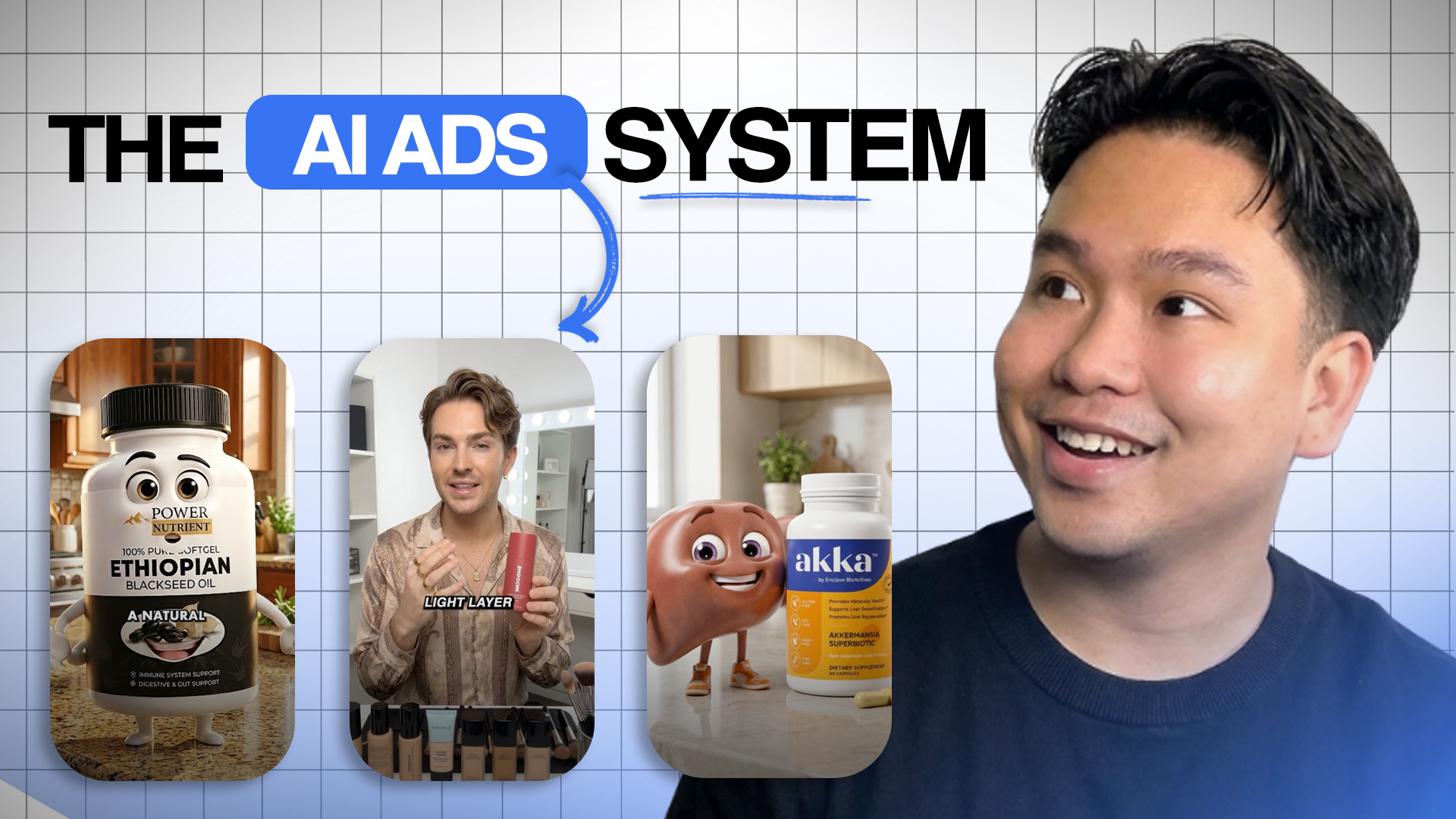
Brands agonize over whether UGC beats studio, whether AI beats a real shoot, whether static beats video. It is the wrong argument. The format is a delivery vehicle. The hook is the engine. A raw phone video with a scroll-stopping first line will beat a cinematic spot that opens on a logo every single time. Use whatever format lets you produce the most genuinely different hooks, fastest, at a cost that lets you fail cheaply. For us that is AI production, because it collapses the time between a new angle and a live test from a week to an afternoon. But the principle holds no matter how you make them: optimize for the rate at which you can test new openings, because the opening is where most of the result is decided.
Brief your next winner from your last winner
The highest leverage habit in a scaling account is treating every winner as a research finding, not a trophy. When an ad wins, break it down before you celebrate it. What was the core emotion in the first three seconds, fear, relief, curiosity, belonging? What problem did it name out loud? What was the visual rhythm? Then write the next batch as deliberate variations on that finding, same emotional nerve, new executions. This is how you turn one winner into a family of winners instead of a one-off. Losing brands chase random new ideas every week. Winning brands mine their own data and press on the nerves that already proved they convert.
The ad does not end at the click
You can win the scroll and still lose the sale if the page breaks the promise. The angle, the hook and the emotion in your ad set an expectation, and the landing page has to pay it off in the first screen. When the ad says one thing and the page says another, the click is wasted and your CPA quietly climbs no matter how strong the creative was. Treat the ad and the first fold of the landing page as a single continuous message. Same hook, same language, same emotion, carried straight through. The brands that hold CPA down at scale are not just writing better ads. They are keeping the entire path, from first frame to add to cart, pointed at one feeling.
What this looks like in your account
When you stop writing better ads and start writing different ones, the shape of the account changes. Instead of ten variations of one promise fatiguing together, you have a spread of genuinely distinct conversations, each one a different door into the same product. Some land, some do not, but the ones that land are winners you would never have found by making your existing ad slightly louder.
That is the real engine behind a lower CPA at scale. Not a secret tool and not a bigger budget, but a steady supply of different angles, written to be felt, sequenced to convert, and produced fast enough to keep testing before the winners tire. The ads are the product. Everything else is just how we make enough of them.